



Sep 30
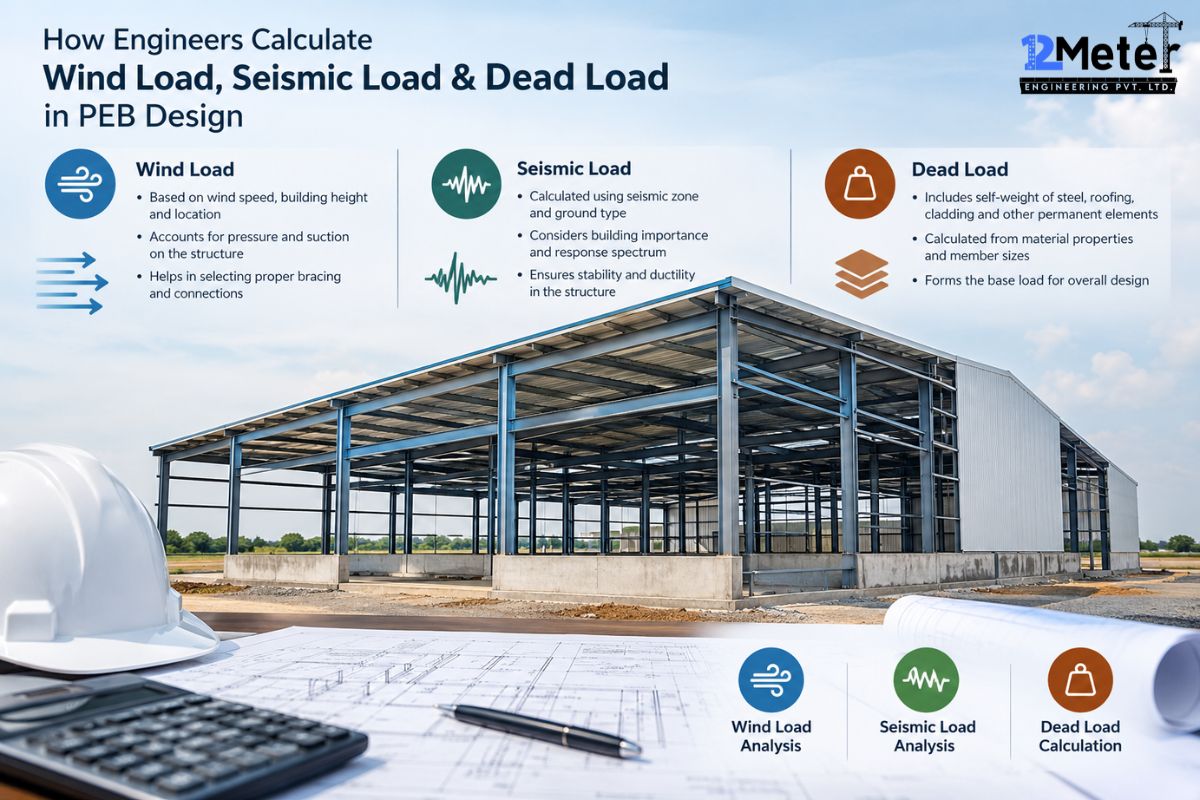
How Engineers Calculate Wind Load, Seismic Load & Dead Load in PEB Design
Table of Contents Engineers work out dead load by adding up the weight of the structure and its permanent attachments. Wind load comes from applying ASCE 7 pressures for the site to the roof and walls. Seismic load comes from estimating the lateral force the building’s mass attracts during ground…
Sep 25

PEB Design Optimization Techniques That Save Material Cost
Table of Contents Pre-engineered building design optimization establishes the correct size for each frame, purlin, girt, and connection according to its load, rather than simply selecting standard rolled sections. The result of this correctly done work is a reduction in steel tonnage by 20 to 35 percent in comparison to…
Sep 22

Common Precast Connection Detailing Challenges and Their Solutions
Table of Contents Tolerance mismatches, restrained movements, issues with welding, problems due to corrosion, conflicts with other trades, and mistakes related to the erection procedure are the typical issues encountered in precast connection detailing. All of the problems mentioned above can be rectified through the drawings. If hardware has allowance…
Sep 19

Complete PEB Engineering Lifecycle: Design, Detailing, Fabrication, Erection and Maintenance
Table of Contents A pre-engineered building (PEB) undergoes 5 different stages before being finally constructed: planning, detailing, manufacture, erecting, and maintenance. The engineer calculates loads and determines the members’ sizes; the detailer prepares drawings for the workshop; the fabricator cuts, welds, and paints steel; the erection crew fastens it on…
